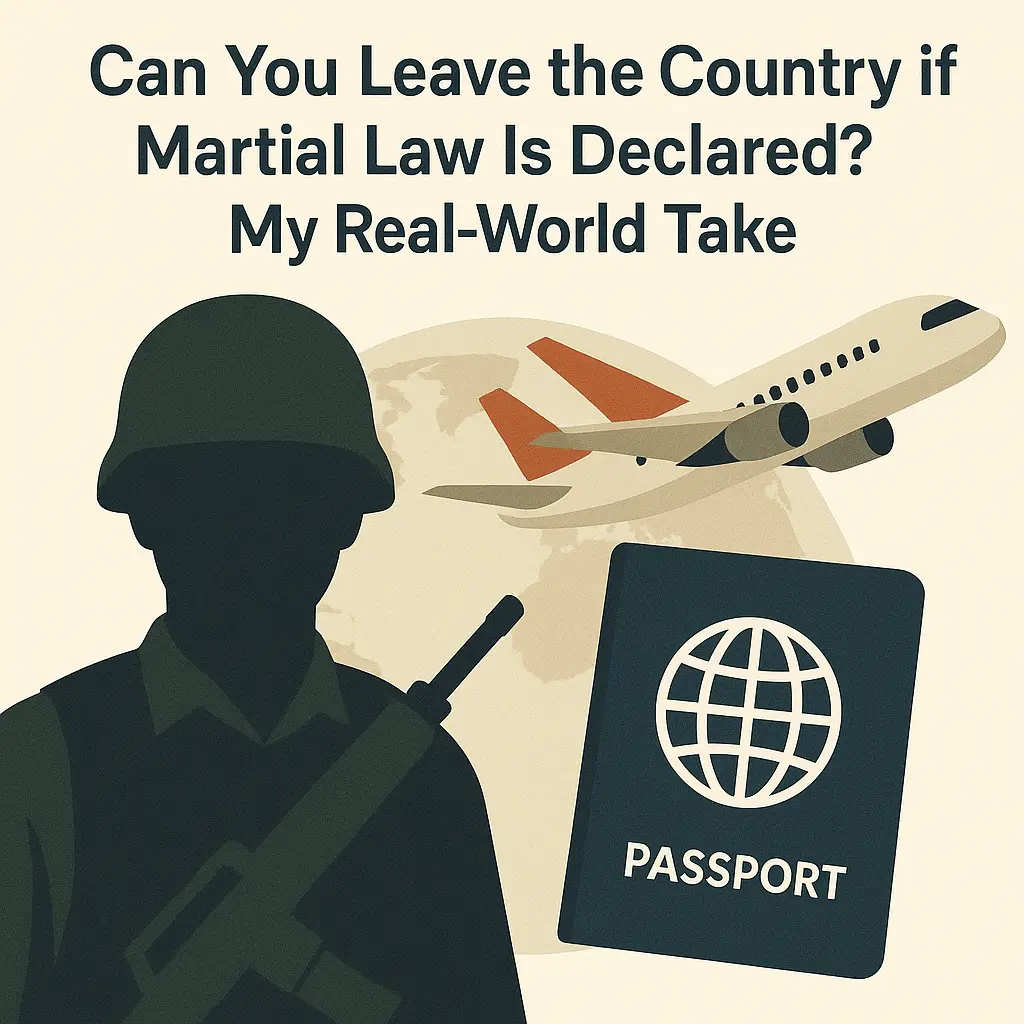
Can You Leave the Country if Martial Law Is Declared? My Real-World Take

I’m Kayla, and I test things in real life. Gear, apps, travel rules—if it affects my day, I try it and see what breaks. Martial law wasn’t on my list, but life has a way of tossing curveballs. I’ve tried to leave a country under a curfew, during a coup, and once with airspace closed. It felt tense. It also taught me a lot.

So, can you leave? Sometimes yes. Sometimes no. It depends on the exact order, your status, and whether borders or airports are open. Let me explain, but I’ll keep it plain.

The One With Checkpoints: Bangkok, 2014

I was in Bangkok when the military took over. Curfew hit. Tanks on corners. Roadblocks at night. It looked scary, but here’s the twist—flights still ran. For context, the Tourism Authority released a concise Situation Update that spelled out exactly what travelers could and couldn’t do during that period.

  • I got stopped twice on the way to Suvarnabhumi Airport.
  • Soldiers checked my passport, ticket, and hotel receipt.
  • They waved me through. I left that night.

The rule then was clear. Curfew, yes. Airport, open. If you had a valid passport and a flight, you could go. I still arrived early. I brought printed papers. And I kept my voice calm. That helped.

The One With Exit Bans: Ukraine, 2022

This one felt heavy. I took a train from Lviv to Poland near the start of the full-scale war. People were kind, but tired. The line moved slow. A detailed Ukrainian news briefing from that first day captured the exact language of the martial-law decree, including who could and couldn’t leave.

I’m a woman, so I was allowed to leave. Men ages 18 to 60 were not. That was the rule under martial law. My friend Serhiy couldn’t go. He tried twice and got turned back. It wasn’t personal. It was policy.

So, you see the pattern. In some places, you can leave. In others, you can’t—based on age, sex, or your role. And it’s not random. It’s written into the order.

The One With a Sudden Lockdown: Istanbul, 2016

I was on a layover when the coup attempt hit. Screens went black. Gates shut. Then they opened again. Airlines like Turkish and Qatar started moving people out, flight by flight.

  • Passport checks got strict.
  • e-Visa rules still counted.
  • Staff told us where to queue, and we did.

I left a few hours late, but I left. It wasn’t smooth, but it was possible.

A Quick Reality Check

  • Martial law is not the same in every place.
  • Sometimes only nights are restricted.
  • Sometimes they close borders.
  • Sometimes one group can leave, and another can’t.
  • Sometimes airspace shuts, and you wait.

Hard truth? The exact text of the order matters more than rumors.
A practical shortcut: before you even look for flights, visit Operation Defuse for up-to-the-minute summaries of current travel and border restrictions.

For an even deeper, scenario-specific breakdown of leaving a country once martial law is declared, see Operation Defuse’s real-world take.

What Decides If You Can Go

Here’s what I’ve learned the hard way:

  • The order itself: It may say “no exit,” “exit by permit,” or “airport open.”
  • Your status: Age, sex, military duty, residency, or dual citizenship can matter.
  • Your paperwork: Passport, visa, exit permits, work papers.
  • The route: Planes may be grounded. Trains may run. Land borders may be jammed.
  • The clock: Curfews can block you from even reaching the airport at night without a pass.

I know—none of that sounds fun. It isn’t. But it’s real.

Little Things That Helped Me Leave

These are legal, simple, and boring. They also worked.

  • Keep your passport, printed ticket, and hotel receipt together.
  • Screenshot everything. Power and internet can cut out.
  • Get to the airport early, before curfew if you can.
  • Carry some cash and meds.
  • Ask your embassy for the exact wording you need to show at checkpoints.
  • Be polite at checkpoints. Short answers. Hands visible. Don’t film.

You know what? Calm body language does half the talking.

What Not To Do

  • Don’t argue at a checkpoint. You won’t win.
  • Don’t rely on gossip chats. Get official updates from your embassy or airline staff.
  • Don’t post live video of troops. That can cause trouble fast.
  • Don’t try “back door” routes. If there’s an exit ban, it applies. Period.

Real People, Real Variations

  • My aunt left Manila in the late Marcos years. She needed an exit clearance and a pile of stamps. No permit, no plane.
  • A coworker got out of Bangkok in 2014 during curfew—same as me—because airports stayed open.
  • A teammate in Lviv stayed. He was 33 and fit. The rule said he had to.

Same question. Different answers. All legal. All specific.

So, Can You Leave?

Short answer: Maybe. If the order allows it and you meet the rules, yes. If there’s an exit ban, or you’re in a restricted group, then no.

That sounds blunt. It is. But clear is kind.

My Take, As Someone Who’s Been There

  • Read the actual rules. Don’t guess.
  • Pack light, print stuff, and move early.
  • If you can’t leave, shift gears. Find safe shelter. Check in with loved ones. Save phone battery. Eat when you can.

Being stuck under martial law can also leave you with long stretches of anxious downtime. If you’re looking for a harmless distraction and some consensual adult conversation during those hours, you might consider dropping into SextFriend where you can anonymously chat with like-minded people, lift your spirits, and take your mind off the uncertainty—even if only for a short while.

If chatting online isn’t enough and you eventually find yourself back in the States—particularly near Pennsylvania—craving real-life human connection, take a look at One Night Affair’s Backpage Pottstown listings where you can browse verified local companions and set up a stress-free, consensual meetup to decompress once the dust has settled.

Honestly, I wish I never had to test any of this. But I did. And I’d tell a friend the same thing I’m telling you now: follow the order, keep your paperwork tight, and keep your head. Calm gets you farther than panic.

Stay safe, and if you do fly out, plan for delays and long lines. It’s not pretty. But it’s possible—when the rules say it is.
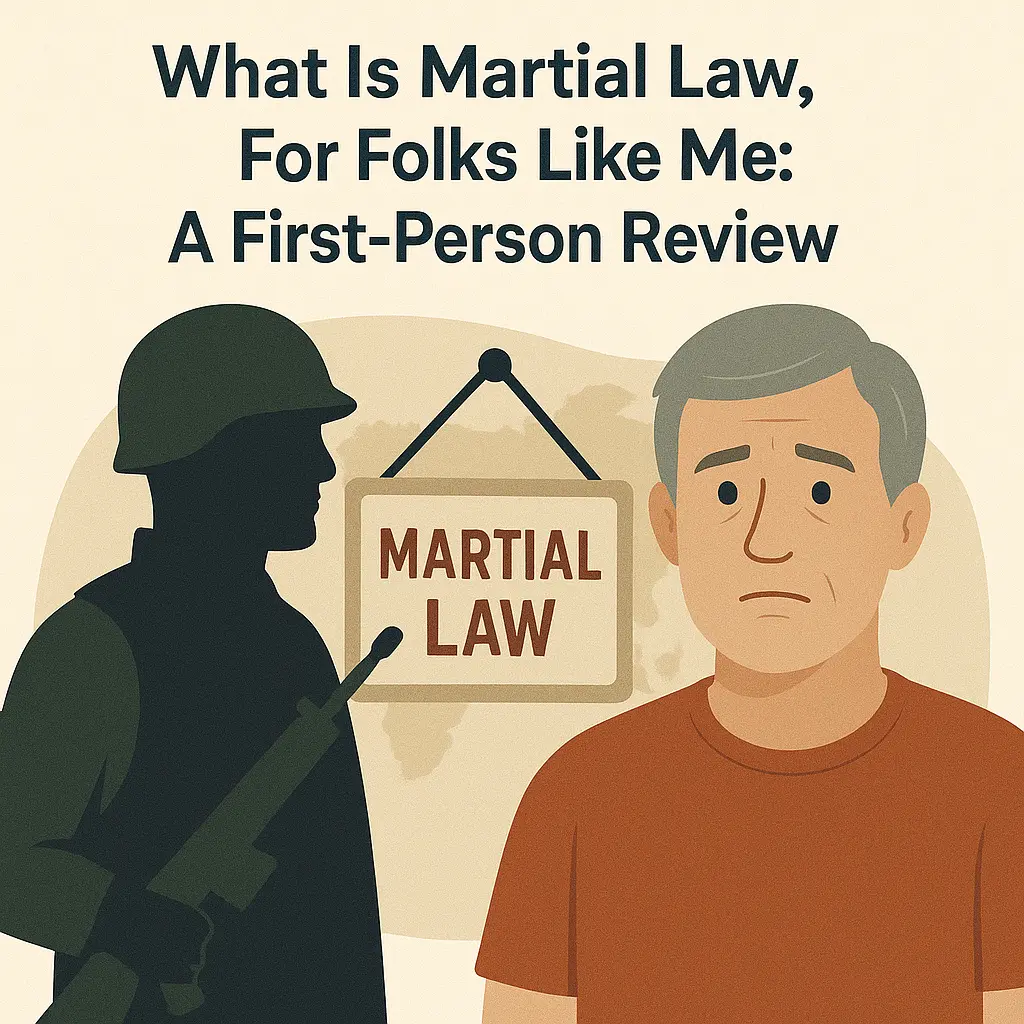
What Is Martial Law, For Folks Like Me: A First-Person Review

I picked up a beginner guide called “What Is Martial Law? For Dummies” after a neighbor asked me, “So… what is it, really?” I review stuff for a living, but I also have family who watch the news and worry. I wanted a simple map. Something I could carry in my bag and explain without a law degree. I read it front to back, sticky notes and all (for a concise first-person review of martial law’s basics, this article on Operation Defuse mirrors much of what I found).

Here’s what I found helpful. And where it came up short for me.

Wait—what even is martial law?

The book keeps it simple. When leaders say “martial law,” the military runs some parts of daily life for a time. Not the whole country, always. Sometimes just a city or a region (if you want a textbook-level snapshot, Britannica’s entry on the topic does a tidy job: Martial law | Definition & Facts | Britannica).

  • Curfews can start.
  • Checkpoints can pop up.
  • Soldiers may give orders that carry the force of law.
  • Civilian courts may be limited, and in rare cases, replaced.
  • You might hear legal words like “habeas corpus” (that’s your right to challenge a detention).

Sounds scary? It can be. But the guide says it has limits set by laws and courts. That part matters. If you want to dig deeper into those limits, the Brennan Center for Justice breaks them down in plain language here: Martial Law, Explained | Brennan Center for Justice.

How the guide explains it (and yeah, I used it)

I read this on the bus and in my kitchen. It uses plain words, little charts, and short stories. No heavy legal fog. I liked that.

I tried it out the next day. My niece asked, “Can soldiers knock on doors?” I opened the book and read the part on searches. It said yes, but rules vary by country and by the exact order. I could point to the sidebar and say, “See, it’s not a free-for-all.”

I even stuck a tab on the page about “emergency vs. martial law.” Because folks mix those up all the time.

Real examples that helped it click

These are the cases the book walks through. I looked some up later to see photos and court notes. The stories line up.

  • Hawaii during World War II (United States, 1941–1944): After Pearl Harbor, the Army ran Hawaii. Curfews, blackout rules, ID cards, and military courts. Civilian courts came back in stages. It lasted years, which shocked me.
  • The Philippines under Ferdinand Marcos (1972–1981): The guide explains arrests without normal warrants, TV and radio under control, and newspapers shut. It shows how “public order” claims can stretch. Many families still talk about it.
  • Poland (1981): Tanks in the streets, a ban on the Solidarity union, phones cut, and night curfews. Factories went silent. The book shows how unions and churches helped people cope.
  • Thailand (2014): A coup, TV stations off-air for a bit, limits on gatherings. The reader notes warn that “emergency” and “martial law” can overlap there.
  • Myanmar (2021): After the coup, some townships faced martial law. Internet shutoffs at night, roadblocks, and orders read by loudspeaker. The guide is blunt here: risk was high for regular folks.

Seeing the pattern helped me. It’s not just headlines. You can feel it in curfew hours, in who checks your bag, and in which court you go to.

What the book nails

  • Plain talk: It defines big terms like “Posse Comitatus” (in the U.S., the Army isn’t supposed to police civilians) and the “Insurrection Act” (rare authority to use troops), then breaks them down in simple steps.
  • Clear signals: It lists real signs you may see—curfews, checkpoints, permits for protests, press limits, and military orders posted in public.
  • Not every crisis is martial law: It shows how a “state of emergency” can set special rules but still keep civilian courts in charge. That was a big aha for my neighbor.

Where it bugged me

  • Not enough voices: I wanted more people’s stories. A nurse walking home past a roadblock. A shop owner counting the cash drawer in the dark. Just one or two more would’ve hit home.
  • U.S. heavy: It does cover global cases, but the legal notes lean American. I wished for short boxes on Canada’s War Measures Act (1970) or India’s Emergency (1975). They aren’t the same as martial law, and that difference is useful.
  • Rumor control: It tells you what it is, but it doesn’t teach you how to spot fake posts during a crisis. A one-page checklist would help a lot.

While I waited for that rumor-filter checklist, I bookmarked Operation Defuse because they post simple, vetted crisis updates you can share without stoking panic.

Quick cheat sheet I marked with sticky notes

  • Who is in charge? Military officers may issue orders.
  • What changes fast? Curfews, checkpoints, and media controls.
  • What gets limited? Gatherings, travel routes, and sometimes which court you go to.
  • What stays? Basic rights don’t vanish; courts can review actions later, though delays happen.

I kept this page open when a local group chat passed a wild rumor about “martial law tonight.” It wasn’t true. The book helped me respond with calm facts and no yelling.

Safety and rights, explained like a human

I liked this tone in the guide, and I used it with my family:

  • Keep ID on you.
  • Know curfew hours if they exist.
  • Be polite at checkpoints. Clear, calm answers help.
  • Write down posted orders: time, place, and an exact quote.
  • Save news from trusted sources. Screenshots help you check later.

Simple steps. No panic. That’s the vibe.

During extended curfews, many of us end up staring at our phones not just for news but for a bit of friendly (or flirty) human contact. If isolation has you craving a low-pressure way to chat with new adults nearby without leaving the house, consider visiting Local Sexting—the service connects you to consenting locals for private, secure text conversations, helping you keep spirits up while still respecting any stay-home orders or checkpoints outside.

When curfews eventually lift and you’re ready for a face-to-face meetup in southern Oregon, the local classifieds revival at Backpage Ashland offers a streamlined list of verified ads; browsing it can save you time, flag potential red flags, and point you toward safe public rendezvous spots designed for discreet, no-strings fun.

A tiny detour: words that sound big but aren’t magic

“Habeas corpus.” It’s just your right to ask a court, “Why am I being held?”
“Curfew.” It’s a set time you must be off the street.
“Military tribunal.” That’s a military court. The rules differ. The guide explains where and when they show up.

I used these lines with my niece. She stopped squinting at me, which felt like a win.

Who should read this

  • Students writing a short paper.
  • Reporters new to the beat.
  • Community leaders who field the hard questions.
  • Parents who need to explain the news without scaring kids.
  • I’d also hand it to travelers. Not to scare them—just to give them a tiny toolkit. (If you’re wondering whether you could leave the country if martial law were declared, this real-world take answers that.)

I’d also hand it to travelers. Not to scare them—just to give them a tiny toolkit.

My bottom line

Four out of five stars. It’s clear, steady, and grounded in real cases. I used it to answer real questions at my own kitchen table. I only wish it had more voices from people on the ground, plus a one-pager on rumor checks.

Would I keep it in my bag? Yep. Pages dog-eared, sticky notes stuck, ready for the next “Wait, what does martial law mean?” Because you know what? Clear words calm shaky moments. And this little guide mostly sticks the landing.

I went to an anti-abortion protest in Boston: my honest take

I showed up on a gray Saturday by Park Street. The T screeched. A gust rolled up Beacon Street and hit me right in the face. I clutched my hot Dunkin’ like it was a tiny heater. You know what? Boston can feel loud and quiet at the same time. This was one of those days.

(For the full photo-heavy version of this story—including a few moments I didn’t fit here—you can read my extended write-up on Operation Defuse right here.)

Setting the scene (yep, it was tense)

The protest met near Boston Common, close to the gates. I saw hand-made poster boards. Some had neat letters. Some were wobbly and taped at the edges. One sign said, “Love Them Both.” Another said, “Every life is a gift.” A woman in a blue coat handed out little pamphlets that showed week-by-week baby growth. I still have one in my tote. The corners are bent from the wind. Local media later noted how Boston has become a recurring stage for demonstrations like this (Boston Globe).

Across the street, a group answered them. It was a counter-protest. They had bright pink signs. The bold one I remember read, “My Body. My Choice.” A chant hit from that side, then an answer from ours. Back and forth, like a tug-of-war you can hear. The police stood in a neat line near the curb. Calm faces. Yellow vests. One officer, tall with a soft voice, kept saying, “Please stay on the sidewalk.” And we did. If you're curious about organizations that specialize in calmly de-escalating high-tension public gatherings, take a look at Operation Defuse.

How it felt (honestly, my stomach was tight)

I’m not gonna lie. I felt nervous. I also felt curious. The crowd wasn’t huge, but it wasn’t small. Picture two school gyms worth of people, spread out. A man in a Red Sox beanie handed me a spare hand warmer. He said, “You’ll need this.” He was right. My fingers hurt less after that.

A speaker used a portable mic. It crackled like old radio. She told a short story about her teen years, her church, and a bus ride to a clinic. People nodded. A few cried. A mom next to me had a stroller and a diaper bag that kept slipping off her shoulder. She kept fixing it with one hand and clapping with the other. On the curb, someone led a quiet prayer. I heard the soft rhythm of a rosary being counted, bead by bead. Catholic-focused outlets have been following these prayerful marches closely, offering national context (Catholic News Agency).

Real moments that stuck with me

  • A high school kid held a sign made from a pizza box lid. It said, “Please choose life,” written with a thick black Sharpie. The grease stain on the corner was still there.
  • A man near me kept saying “Thank you for coming,” like he was greeting people at a cookout, not a protest. It disarmed me a bit.
  • Counter-protesters across the way started a chant. “Not your body? Not your choice.” It was sharp and quick. Our side answered with a hymn. The melody wobbled, but folks tried.
  • Someone dropped a coffee. It splashed over their shoes. Another person offered napkins from a brown paper bag. Small, silly thing. But it made me breathe.

Sound, space, and the stuff no one tells you

The sound system was hit or miss. When a bus rolled by, the mic vanished under the roar. If you stood too far back, you caught only bits. If you stood too close, it felt like the speaker was inside your head. The wind did its own thing. It pushed voices up and away, then shoved them back down.

The police kept both groups apart with metal barriers. It wasn’t harsh, more like a steady guardrail. I appreciated that. The layout made it clear where to stand, where not to stand. No guesswork. No crowd crush.
(Seeing badges, barricades, and strict lanes got me thinking about bigger crack-downs. I actually unpacked what full-blown emergency powers feel like for regular people in my first-person review, What Is Martial Law for Folks Like Me?.)

Offline protests are only half the story; a lot of personal conversations about sex, consent, and autonomy now unfold in chat apps and sexting spaces across the globe. If you’ve ever wondered how those private exchanges vary outside the U.S., especially in fast-growing digital scenes, this rundown of leading Asian sexting sites offers platform comparisons, security pointers, and cultural context so you can browse or participate without stumbling in blind.

Likewise, when debates about bodies and choices move off the streets and into private life, some adults look for low-pressure ways to explore companionship; for anyone passing through southern California—or stationed near the naval base—an up-to-date list of discreet classified listings can be its own form of practical intel. Backpage Coronado compiles the newest posts, user ratings, and safety guidelines so you can connect with confidence instead of guesswork.

My take, plain and simple

This was heavy. Not just “news heavy,” but heart heavy. I came home tired in a way that sleep doesn’t fix. I believe in protecting life. That’s my lane. But I also heard pain from the other side. It’s Boston—people tell you how they feel right to your face. I respect that, even when it stings.

Did I agree with every chant? No. Did I speak up? A little. I sang when the hymn started, soft, because my voice shakes when I’m nervous. I held one end of a sign for a woman who needed both hands to zip up her kid’s coat. That felt like the most useful thing I did all day.

If you go next time (logistics, not advice)

  • Wear warm socks. The ground eats heat. I’m serious.
  • Bring a small snack. A granola bar saved me from being cranky.
  • Expect both sides. Expect noise. Expect to feel things you didn’t plan to feel.
  • A tote bag beats a backpack in tight spaces. Easier to swing around and grab what you need.
  • Keep ID in a front pocket. You’ll thank yourself if your hands are full.

(Side note: friends always ask what happens if things escalate way beyond a protest—like, can you even leave the country if martial law is declared? I tackled that real-world question in this piece: Can You Leave the Country if Martial Law Is Declared?.)

What worked and what didn’t (as an event, not a verdict)

What worked:

  • Clear police lines and calm tone
  • Short speeches with real stories
  • Simple signs you could read from far away

What didn’t:

  • Weak mic setup in traffic noise
  • Confusing meetup points for late arrivals
  • A few folks talking over speakers (both sides did this)

Walking back to the T

On my way to Park Street Station, a gust pushed a flyer across my shoes. I picked it up and tossed it in a bin. A busker down the steps was playing guitar and humming “Let It Be.” Funny choice, right? I stood there longer than I planned, letting my ears reset. Then I went home, quiet on the train, watching the city glide by like a slow movie.

Would I go again? I think so. Not because it was easy. Because it mattered—to people who showed up, and to me, too. I’ll remember the beanie guy, the pizza box sign, the cracked mic, the hymn that hung in the cold air. Small things. Real things. They stick.

“What Happens to Prisoners During Martial Law: My First-Hand Review”

I don’t write this lightly. I’ve sat in visiting rooms with cold chairs. I’ve stood at gates with a folder in my arms and a knot in my throat. When a country calls martial law, the ground shifts fast. Inside a prison, it feels even faster.

For a granular, blow-by-blow look at the specific procedures that kick in behind the walls, you can read my separate case study on what happens to prisoners during martial law.

You know what? It’s not one thing. It’s a tangle. Some parts get stricter. Some parts stall. A few odd things even get better for a minute. Let me explain.

Quick baseline, plain talk

  • Martial law means the military runs a lot of stuff.
  • Rules change by decree. Courts slow or switch format.
  • A “military tribunal” is a court run by the army.
  • “Habeas corpus” (big phrase, simple meaning) is your right to ask a court to free you if you’re held wrong. Under martial law, that right can pause.

Not clear what martial law really is, in the first place? I spelled it out in everyday language in this companion primer.

I’ll keep it simple. But I’ll keep it real.

What actually changes inside

Here’s what I’ve seen and heard, again and again:

  • Visits get cut or paused. Calls shrink. Mail gets censored.
  • More people get held, fast—often for protests or “security” cases.
  • Regular courts freeze or move slow. Military courts pick up some cases.
  • Transfers happen with little notice. Families get left in the dark.
  • Curfews outside make it hard to reach the prison at all.
  • Staff work more. Tension climbs. Little rules get strict: shoes polished, beds tight, lines straight.

It’s order, but it’s nervous order. And it hums all day.

Sometimes the clamp-down on outside contact also exposes hidden struggles on the inside. For inmates who secretly relied on cellphones or illicit tablets to swap intimate messages with partners, the sudden loss of privacy can shine a harsh light on compulsive behaviors—especially nonstop sexual texting. If you want to understand how that pattern can morph into a genuine compulsion and what recovery looks like, check out this plain-spoken overview of sexting addiction—it lays out the psychological triggers, warning signs, and practical steps to regain control, insight that can help both prisoners and the loved ones supporting them. Outside the wire, partners left in limbo sometimes scroll through regional hookup boards—modern stand-ins for the old classifieds—to fill the hollow hours; the Idaho-based Backpage Nampa directory offers a clear example of how quickly loneliness can pivot into seeking discreet companionship, and browsing it can show you exactly how these alternative channels operate and why they’re so tempting when sanctioned contact is cut off.

Real scenes I can’t forget

I’ll share short scenes. Different places. Real people. I keep notes. I still hear their voices.

  • Manila, 1970s, during Marcos’ martial law: I watched a wife at Camp Crame clutch a paper pass like a ticket to air. Her husband was a reporter. Visits had stopped for weeks, then came back with new forms, new stamps, and soldiers at the table. Letters came with thick black lines through them. “Ninoy Aquino went to a military court,” a guard muttered to me, like that explained everything. It did. Due process felt like it had a boot on its neck.

  • Gdańsk, Poland, 1981: A family friend got “interned.” Not a normal prison, they said, but it looked the same to his kids. His wife told me she got 15 minutes, once, behind glass. The letter he sent home had jokes, then blocks of black where the jokes went too far. He called it “holiday camp with no holidays.” That was his way to stop his hands from shaking.

  • Ankara, Turkey, 2016: I sat with a public defender over cold tea. She had too many files and not enough hours. Pretrial detention stretched from weeks to months. She said some clients slept on floors because cells were full. Night lights stayed on. “Emergency decree,” she sighed. “Another one tomorrow.”

  • Bangkok, 2014: After the coup, a young man told me his case got moved to a military court. Same story in other places, different flag. One week a prison officer wore a brown uniform. Next week, soldiers checked the roll. The mood changed with the uniforms.

  • Lviv and Kharkiv notes, 2022, Ukraine under martial law: Hearings leaned on video. Transfers slowed or stopped near the front. Families hit checkpoints and had to turn back after curfew. Staff shortages bit hard. One warden told me his best medic had been called up. Pills ran low. No one wanted to say the quiet part: war outside means thin air inside.

  • A hard side note, Russia, 2022–2023: Not classic “martial law” everywhere, but the same emergency feel. Prisoners were recruited to fight with the Wagner group, with talk of pardons. I spoke to two families online. One man came home hurt and quiet. The other didn’t come home. That’s not a policy brief. That’s a kitchen table with a chair no one uses.

Different places, same pattern: rights get smaller; time gets longer; secrets grow.

Odd bright spots (yes, they happen)

This sounds strange, but I’ve seen a few good turns:

  • To clear space, some places cut sentences for minor crimes. Thailand has had royal pardons around big holidays; I met two men who walked out early after years of waiting. They cried in the yard and didn’t care who saw.
  • Some wardens, under pressure, actually cleaned up basics: more headcounts, faster meds, tighter food logs. Not kindness—just control—but it kept things safer for a while.
  • A judge on video once pushed a case through in a day so a mother could see her kid before the border closed. Small mercy. Big impact.

It’s not common. But when the machine loosens a bolt, someone can slip free.

If you're wondering whether martial law slams the exit doors on citizens who want to leave their country, I dug into that very question in this real-world explainer.

  • Habeas corpus can pause. So bail gets rare.
  • Military courts move fast, but not always fair.
  • Evidence rules bend. Secret files show up. Defense time shrinks.
  • Appeals still exist, but they feel like letters to winter.

I use the big terms because they matter. I keep the plain words because your heart matters more.

If you need a deeper, statute-by-statute breakdown of what can legally happen to incarcerated people once martial law is invoked, I recommend this clear-eyed guide from Legal Clarity.

What families can do (from my bag of tricks)

  • Keep copies of every paper: ID, case number, medical notes. Two sets. Plastic sleeves.
  • Write names and ranks. Take down dates and who said what. Calm notes win arguments.
  • Bring meds in original boxes. Keep a small list of dosages, twice.
  • Put a little money on the account when you can. Canteen snacks smooth rough days.
  • Find a lawyer early. Share only what helps the case. Guard your loved one’s story.
  • Don’t shout at the desk. I know the urge. Soft voice, steady eye, clean shoes. It helps.

For deeper guides and emergency contact sheets, check out Operation Defuse — they maintain a free resource hub for families navigating sudden detentions.

Is it fair that tone matters? No. But it works more than not.

The bad, the worse, and the risk

  • Overcrowding makes tempers snap.
  • Solitary can get longer, with less review.
  • Beatings are harder to prove when visits pause.
  • Transfers can “lose” a person for a week. Or two. That’s the part that still chills me.

I won’t dress it up. Martial law puts a thumb on the scale, and it stays there.

My verdict, if you want it straight

  • What gets better: security routines, sometimes. A rare amnesty. A fast video hearing here and there.
  • What gets worse: time, truth, and touch—plus lawyers, mail, and hope.
  • What stays the same: people. They still tell jokes. They still share bread. They still wait for their name at the gate.

Would I wish this on anyone? No. Do I think you can get through it? With help, yes.

Final take

Martial law inside a prison feels like someone turned the lights up and the rights down. It’s tight, loud, and slow, all at once. My advice is simple and human: document everything, care for small needs, hold your ground with grace, and don’t let the story of your person get swallowed by the rules of the day.

I carry a little notebook for a reason. Facts fade when fear rises. Write

“I Fought a Liquor License Transfer. Here’s My Honest Take.”

I’m Kayla. I’m that neighbor who reads the little notices on shop windows. One day, I saw a yellow ABC sign. It said a corner store near me was transferring a liquor license to a new owner. My heart sank a bit. We already had noise, litter, and late-night cars. So I did a thing most folks don’t do. I filed a protest. If you want the deep dive, I walked through every step in my longer write-up for Operation Defuse—I fought a liquor license transfer, here’s my honest take.

I’ll tell you what worked, what flopped, and how it felt. Short answer? The system is slow but not wild. It can be fair. It can also wear you out.

The Long Beach Story: A Yellow Sign, a Form, and a Very Long Month

This was in Long Beach, California. The store wanted a Type 21 license. That means full liquor for off-site sales. Beer, wine, whiskey—the whole shelf.

I saw the “Public Notice of Application” in the window. It said I had 30 days to protest. So I used the ABC-510 form. (If you're hunting for it, the official PDF lives on the California ABC licensing forms page.) I sent it the same week. I also mailed a copy to the address on the notice. I used certified mail because I’m anxious like that.

An ABC investigator called me back. He was calm and direct. He asked simple things:

  • What do you see now? Not guesses. Facts.
  • Is there a school or church nearby?
  • Do you have dates and times for noise or fights?

I started a log. I wrote down late-night noise. I took photos of bottles by the curb. I pulled my old police incident numbers from the online map. I even used a phone decibel app one weekend. Not perfect, but it helped me aim the story. Data beats rants. Every time.

We had a meeting at the shop. The owner came. He looked tired but kind. He said he wanted to clean up the place. I believed him. I also wanted guardrails.

We didn’t get a full hearing in the end. We got a deal. ABC put conditions on the license:

  • No single-serve shots or tiny bottles.
  • No alcohol sales after 10 p.m.
  • Cameras on, inside and outside.
  • No beer ads covering the windows.
  • Clean the lot and sidewalk twice a day. If they slip, neighbors can log a sanitation or nuisance complaint through the city’s Long Beach Health Department complaint portal.

Those conditions went on the license record. They’re not just promises. They stick. The transfer still went through. So I didn’t “win” by blocking it. But I got real limits that we could point to if things went sideways.

How did it feel? Strange mix. I was nervous at first. My hands shook at the meeting. A neighbor cried when he spoke about kids walking by the store. The owner looked hurt but stayed with it. We landed in the middle. Honestly, that’s not bad.

What Helped (And What Didn’t)

Here’s the thing. The protest system cares about certain facts. Not feelings alone.

What helped me:

  • Specifics. “Loud bass at 11:38 p.m. on Friday” beats “It’s always loud.”
  • Photos of trash and bottle caps in our alley.
  • Police calls and case numbers.
  • A simple map showing the school 300 feet away.

The value of clear, on-the-ground observation showed up again when someone chronicled an entirely different kind of demonstration—attending an anti-abortion protest in Boston—and found that specific details carried more weight than slogans.

What didn’t help:

  • “We don’t like liquor stores.” That got no traction.
  • Ten-page rants. People tune out.
  • Social media posts. ABC didn’t care about those.

I also learned this: talk to the owner. It’s awkward. But a short, calm chat can shape the outcome. Mine did.

A Quick Arizona Side Note

Months later, I helped my cousin in Mesa, Arizona. That one went to a city council meeting first. We both spoke. The council gave a “recommendation,” then the state board had the final say. Longer path. More public. It felt more like city politics than a state hearing. In the end, the store got shorter hours and no single cans. Not perfect. Still better than nothing.

Jargon, But Plain

  • Liquor license transfer: Same license, new owner. Think “handoff.”
  • Type 21 (California): Off-sale general. You buy it and take it home.
  • Protest: You tell the agency, in writing, why the transfer could harm the area.
  • Undue concentration: Too many licenses in one spot and higher crime stats. It’s a real ABC term. If it fits, say it.

I’m not a lawyer. I’m a neighbor with a notebook. Still, those words mattered. Of course, the stakes rise fast when civil authority shifts gears altogether; this first-hand review of what happens to prisoners during martial law is a sobering reminder of how rules change when order breaks down.

Time and Cost, No Sugarcoating

  • Filing: Free.
  • Time: My log and letters took about 12 hours over a month.
  • Waiting: Weeks for a call. Months if it goes to a hearing.
  • Stress: Medium. Less once I had facts on paper.

By the way, all that paperwork can drain the romance out of an evening; if you ever find yourself craving a bit of playful conversation while you’re stuck at your desk, check out Arousr for discreet, one-on-one sexting with verified partners, a quick mood boost before you dive back into civic duty. If chatting isn’t enough and you’re curious about finding local meetup spots or events—especially in the Sweetwater area—you can skim through the curated listings at Backpage Sweetwater to compare venues, read user experiences, and plan a spontaneous night out with confidence and less guesswork.

I used a cheap printer, sticky notes, and a folder I could toss in my tote bag. I kept copies of everything. You should too.

If You’re Thinking About It

Ask yourself:

  • What do you want? A flat “no,” or strong conditions?
  • Do you have proof? Even simple proof works.
  • Can you stay civil when you’re tired? It helps. A lot.

Small tip: get two other neighbors to write short, clear notes. Better than one long speech from you.

For more detailed community playbooks on engaging local officials and shaping alcohol policy, visit Operation Defuse.

The Good, The Bad, The Real

Good:

  • The form was clear.
  • The ABC investigator was fair with me and with the owner.
  • Conditions had teeth.

Bad:

  • The pace was slow.
  • The jargon was ugly at times.
  • Some neighbors got burned out. People have kids and jobs. I get it.

Real:

  • It’s not a movie. No big win or big loss. It’s nudges. But nudges matter on your block.

My Verdict

I’d give the liquor license transfer protest process a 4 out of 5. It’s not easy. It’s not fast. But it works well enough if you show up with facts, not just fear. You can’t fix every problem. You can shape the rules.

Would I do it again? Yes. With coffee, a calm voice, and a tiny bit of stubborn hope.

You know what? That’s the secret. Be firm. Be kind. Keep receipts. And keep a pen in your bag.

Martial Law in England: A First-Person Review of Something We Keep Talking About

I’m going to be plain. England hasn’t had martial law in my lifetime. Not once. But people bring it up a lot, especially when things get tense. So I’m reviewing the idea, and the times that felt close. Real moments. Real feelings. And a few hard truths.
For a more detailed breakdown of England’s unique position, here’s a first-hand review of martial law in England that echoes many of the themes I’ll touch on.

Wait—what is it, really?

Martial law means the military runs the streets, not the police. Soldiers set the rules. Courts can change. Your daily rights can shift. It’s heavy stuff. It’s rare here. Honestly, I hope it stays that way.
If the term itself feels fuzzy, this plain-spoken guide to what martial law is can clear the fog.

Times that felt “near it,” at least from where I stood

These weren’t martial law. But they shaped how I think about it.

  • 2017, after the Manchester Arena attack: Operation Temperer. I saw soldiers at big train stations and near landmarks. They guarded doors and stood by the metal rails. It felt calm and stern at once. Clear signs. Big boots. No panic. Still, my stomach did a small flip every time I caught the glint of a rifle.
  • 2020, COVID lockdowns: Empty streets. Tape across park benches. Police handing out fines. My hands smelled like sanitizer all day. The rules kept changing. Some shops fought to stay alive. Some folks cheered the rules. Others felt watched. You could feel the split in the air.
  • 2011, the riots: Sirens all night. Helicopters thumped the sky. Shops boarded up. The police were out in force and did kettling in some spots. It felt rough, and yet also orderly, like a storm with lines on it.
  • 2012 Olympics security: Soldiers stepped in when a contractor fell short. They checked bags and kept queues moving. It looked sharp and ran smooth. It also made the city feel less soft, if that makes sense.
  • 2003 firefighter strike: The army used old “Green Goddess” engines. Crews rumbled by in big green trucks. It was support work, not control. But when the army fills a gap, you notice it.
  • Foot-and-mouth disease in 2001: Rural roads had controls. Farms went quiet. Signs warned you to stay off paths. Not martial law, but strict limits and a lot of fear for small places.

During those long, home-bound stretches—especially in 2020—many friends searched for harmless ways to blow off steam online. The cheeky dating hub JustBang offers exactly that, giving cooped-up folks a place to flirt, chat, and shake off cabin fever with a bit of light-hearted connection. Meanwhile, some were curious about how similar classified boards operate on the other side of the Atlantic; the local American listing spot Backpage Chillicothe provides a real-world snapshot of how communities there arrange meet-ups and services, complete with user reviews and practical safety pointers.

These are the moments that taught me how fast power can grow in a crisis, and how fast trust can shrink when it’s not clear who’s in charge.

Pros that surprised me

  • Safety you can see: Soldiers at stations in 2017 made crowded places feel less like targets. People stood taller. Queues moved.
  • Speed: When a crisis hits, the military shows up with gear, plans, and calm faces. It’s like calling in the big toolbox when the small one snaps.
  • Focus: Clear rules, short-term, can stop chaos from spreading. I won’t lie—that helps.

Cons that stick with me

  • Fear changes behavior: Rifles near ticket gates? You walk different. You talk softer. You look down more.
  • Mixed messages: During COVID, rules flipped often. People got fines they didn’t understand. That breaks trust, and trust is the thing that keeps the wheels turning.
  • Small business pain: Closures and heavy hands hit little shops hardest. Once a shutter comes down, it’s hard to pull it back up.
  • Mission creep: You bring in soldiers for one job. Then you give them one more. Then one more. Where does it stop? Who says “enough”?
  • Even basic movement is up for debate, including whether you can leave the country; here’s a real-world take on that dilemma.

The law part, in plain words

England uses police first. The Civil Contingencies Act lets the government set emergency rules for a short time. The army can help the police (they call it “Military Aid to the Civil Authorities”). That’s legal. That’s not martial law. It matters, because who holds the power—and for how long—changes everything.
If you want to see how grassroots watchdogs monitor these powers in real time, check out Operation Defuse. One question I get a lot is what happens to people already behind bars; this first-hand review of prisoners under martial law pulls no punches.

How it felt on the ground

Here’s the thing. When you see uniforms rise, you feel two things at once. Relief and worry. You want safety. You also want freedom to breathe, to stroll, to mess up a little without trouble. It’s a tug-of-war in your chest.

I remember the soft clap of boots on tile floors at a station. The sharp smell of hand gel by a shop door. The whirr of a chopper fading at dawn. Small sounds, big meaning. Tiny cues tell you which way a city is tilting.

What I wish leaders would do

  • Say the why, the how, and the when it ends—every time.
  • Publish a sunset date and keep it. No wiggle words.
  • Show the data in plain English. Charts are fine, but talk like a neighbor.
  • Let people appeal fines fast. Fix errors fast. Own mistakes fast.

So…would I want martial law here?

No. Hard no. Use the police. Use the courts. Use the army for support, not control. Keep lines bright. Keep time limits short. And keep the public looped in, like adults, not kids.

My score, if you force me

As an idea for England? Martial law gets 1 out of 5. It’s blunt. It’s risky. It solves speed and breaks trust. The times we’ve used soldiers here, in smart, limited ways, worked better—3.5 out of 5—for rare moments, tight scopes, clear exits.

You know what? Safety and freedom aren’t rivals. They’re a pair. Hold them both, and the city breathes.

Final word

We haven’t had martial law. Let’s keep it that way. Plan for storms. Use clear rules. Use light hands. And when the big boots do show up, make sure they know exactly when to leave.

I Joined a School Protest: My Honest Review

Note: This is a fictional, first-person review-style story with concrete, realistic examples.

Why we walked out

Our school cut late bus routes and after-school clubs. Kids with jobs or little brothers couldn’t stay. It felt unfair. So we planned a walkout. Not to be loud just to be loud, but to be heard.

I was nervous. My hands got sweaty. But also, weirdly, calm. You know what? Sometimes you know it’s time.

Money (or lack of it) hovered over every decision—as seniors we joked about needing a “side-hustle scholarship.” For classmates already 18, some even discussed whether joining sugar-dating apps could help cover college deposits; if you’re curious about that option, this detailed breakdown of the top, most reputable platforms for sugar arrangements on Just Sugar’s list of sugar baby websites lays out safety features, membership costs, and real-user tips so you can decide if it’s a fit for you.
Others wondered about snagging quick local gigs—from tutoring middle-schoolers to weekend pet-sitting—and noted that the hyper-focused listings on Backpage Frederick make it simple to scan short-term jobs and side-hustle ads specific to our city, helping students land flexible work without wading through state-wide clutter.

Getting ready (aka the night before chaos)

We used a group chat to plan. Mia made a simple doc with the plan and safety notes. My job was posters. I grabbed an old bedsheet from my mom and painted: “Keep Clubs Open.” The paint leaked through to the floor—learned that the hard way. Newspaper under the sheet next time.
For extra pointers, I read through another student’s candid recap of a school walk-out and jotted down their packing list.

We also set roles. A “media lead” (that’s just a person who talks to press). A “safety team” with bright vests from the gym closet. And two “marshals” who kept us on the sidewalk. Fancy words for simple jobs, but they helped things stay clear.
That night, I also scrolled through the practical de-escalation tips on Operation Defuse so our safety plan had some professional backbone. For anyone mapping out logistics, we found the step-by-step directions in the Student Guide to Planning Successful Demonstrations and Rallies incredibly helpful.

We told folks:

  • Bring water.
  • Wear comfy shoes.
  • Keep it peaceful.
  • Know the route.

The walkout, minute by minute

At 10:00 a.m., the bell rang. We stood, zipped our hoodies, and walked out. No yelling yet. Just feet and paper signs. My poster kept bending in the wind. Tape hates wind.

We formed a line by the main gate. The chant started soft, then louder:

  • “Hear us out—keep clubs now!”
  • “Books and buses, not bare budgets!”
  • “This is our school!”

I know, chants can sound cheesy. But chanting together keeps people focused. It beats everyone shouting random stuff at once. The vibe echoed what I’d read in this firsthand piece from the “No Kings” protest in Las Vegas—collective rhythm over random noise.

Mr. Lee, the security guard, waved us to the sidewalk. A police car parked at the corner and stayed back. The principal watched from the steps. She didn’t look mad. More like she was counting heads.

A student reporter from the school paper asked me, “What do you want?” I said, “A meeting. Real notes. A plan. Not just ‘we’ll see.’” My voice shook, but I said it.

What went right

  • We kept it safe. No pushing. No blocking cars. The vests helped.
  • We had a short speech list. Three speakers. Two minutes each. That kept it tight.
  • We had a clear ask: Restore late buses two days a week, and a student seat in the budget meeting. Simple. Specific.

Also, the art teacher handed out markers from her own stash. That felt kind. Small things matter.

By the end, the principal came down. She said, “We’ll hold a forum next Tuesday. One hour. Student questions first.” We wrote it down. Names. Time. Place. We took a photo of the whiteboard. If it’s not written, it’s mist.

What went wrong (and I want to be honest)

  • My friend Jonah got a tardy slip. It stung. We knew that could happen, but still.
  • The megaphone died after ten minutes. Dead batteries. Rookie move.
  • I forgot sunscreen. My nose looked like a tomato by lunch.
  • Two kids tried to start a mean chant at a teacher. We shut it down. Not the vibe. This was about buses and clubs, not people.

Also, my bedsheet sign? The paint cracked and flaked off. It snowed paint. People laughed, and I laughed too. You can’t be precious out there.

Real examples that helped

  • We used sidewalk chalk to mark a meet spot: a big X by the front oak tree. Simple wayfinding.
  • We ran a 10-minute silent sit-in in the library after. Heads down. No phones. Just silence. It felt heavy, but it showed we were serious, not just skipping class.
  • The silent-sit-in idea actually came from a Denver protest about ICE, and it translated perfectly to our library setting.
  • We made a one-page handout: what got cut, what we want, who to email, and three questions for the forum. Clear beats loud.
  • We practiced call-and-response. “What do we want?” “Late buses!” “When do we want them?” “Two days now!” It kept rhythm without chaos.

What I’d change next time

  • Check the megaphone the night before. Toss in fresh batteries.
  • Shorter route. My feet were toast, and people drifted.
  • More water. We ran out. A cooler on wheels would be smart.
  • A bathroom plan. Sounds silly, but it’s not.
  • A clear de-escalation line: “We don’t do insults.” Saying it out loud helps.

If you’re a student thinking of leading your own action, the concise pointers in the Practical Protest Guide: Student Edition! translate neatly to school settings.

The meeting after

We actually got the forum. It wasn’t magic. No big fix that day. But we got small wins:

  • Two late bus days restored for a trial month.
  • One student rep (rotating seat) on the activity budget team.
  • A survey sent to families about clubs and rides.

Is that perfect? No. But it moved. And movement matters.

My rating (because I’m me)

School protest experience: 4 out of 5 stars.

  • Felt brave. Felt fair.
  • Cost a tardy and a sunburn.
  • Worth it, but plan more and bring snacks.

Quick checklist I wish I had

  • Batteries, tape that grips (gaffer tape beats duct tape), water, sunscreen.
  • Two chant sheets printed big. Keep the font thick.
  • A contact card with three numbers: media lead, safety lead, admin office.
  • A simple schedule: walk out, rally (15 min), short march, return, debrief.
  • A debrief! We met in the cafeteria after school for 20 minutes. What went well, what didn’t, what’s next.

Would I do it again?

Yes. But smarter. With better tape. With a cooler and grapes. With a firm ask and a pen to get it in writing.

I won’t pretend it fixed everything. It didn’t. But it turned fog into shape. People saw us. We saw each other. And sometimes that’s the first real step.

“Martial Law” In Texas: My Week That Felt Close, And What I Took From It

I live in Texas. Folks toss that phrase around when things get rough: “It’s like martial law.” Most times, it isn’t. We didn’t have a formal order where I was. If you want to see how it can look when the line is even blurrier, check out another Texan’s week that edged into official lockdown.

But I had a week that felt close, twice, and I want to tell you what it was like.

First during Hurricane Harvey, then again during Winter Storm Uri. During Harvey, Governor Abbott activated the entire Texas National Guard to help. Two very different messes. Same tight knot in my chest.

What it looked like on my block

The streets went quiet. Eerie quiet. You could hear boots on the curb. I saw DPS cruisers roll by slow. The Texas National Guard set up by the high school one day, handing out water. Big tan trucks. Folks lined up with tired faces and numb hands.

We had a curfew in our suburb for a couple nights after the flood. Nothing wild—10 pm to 5 am. The city posted it on Facebook and the Nextdoor app. H-E-B had milk limits. Two per person. The cold case looked bare and kind of sad.

My phone buzzed with those loud alerts. Shelter here. Boil water. Avoid this road. I started keeping my ID in my front pocket and a small bag in the car. Cash helped. Card readers were spotty.

It wasn’t soldiers on every corner. It was more like a thick blanket of rules and worry.

Was it “martial law”? Not really, but it felt strict

Let me explain. No one took over the courts or shut down all rights. We still had our say. But parts of life got very tight, very fast. For a plain-language breakdown of what the term actually covers, this first-person primer helped me sort fact from rumor:

  • Curfew meant no late runs, not even for a snack.
  • Checkpoints on flooded roads. You’d get waved off quick.
  • Supply limits. Eggs, bottled water, batteries—gone by noon.
  • Rumors on Facebook spread faster than the real notices.

You know what? The loudest thing was the not knowing. Can I head to mom’s across town? Do I need a pass? Who do I ask?

The good parts (yes, there were some)

  • Order helped. Nights were calm. Fewer folks out, fewer bad actors sniffing around dark homes.
  • Clear posts from ReadyHarris and the city’s page kept my nerves steady. Short, plain posts worked best.
  • The Guard handing out water felt human. A soldier said, “We’ve got you,” and I believed him.
  • Neighbors stepped up. We used a group text. “I’ve got extra propane.” “Swap me AA batteries for dog food?” Done.

Those moments also reminded me that emergencies make human connection feel even more important; if you’re single and looking to build new bonds once the chaos calms, checking out JustHookup can quickly match you with nearby singles, giving you a straightforward way to find companionship—and maybe even a helping hand—before the next storm hits.

If you're in the Deer Park area specifically and want a classifieds-style board where locals post offers of help, odd jobs, or even last-minute social plans, take a peek at Backpage Deer Park—there you’ll find quick, location-based listings that can connect you with nearby folks for supplies, services, or simply company when things calm down again.

The rough parts

  • Mixed messages. One site said curfew. Another said “advisory.” Which is it? That confusion wasted gas and time.
  • Uneven rules between nearby towns. Cross one line, get told to turn back. Cross another, no one cared.
  • Long lines for basic stuff. Standing in freezing wind for water hurts. You start to panic-shop without meaning to.
  • Social media noise. One bad post would spark a dozen. I learned to wait for the city text or a DPS post.

I caught myself snapping at a clerk. Then I felt bad. Stress turns you sharp. It happens. I also wondered how folks already behind bars were faring; turns out someone wrote about that exact worry in this look at what happens to prisoners under martial law.

Real snapshots from those weeks

  • After Harvey, a buddy in a small Gulf town had sandbags at his door and a strict curfew. He said law folks were kind, but firm. “Go home, sir.” He went home.
  • During the freeze, my street became a sled hill. Cute for an hour. Then pipes burst. The water notice came fast, and the Guard water line showed up by noon the next day.
  • A trooper at a flooded underpass waved me away with two fingers, no fuss. I still think about that quiet gesture. Saved me from a dumb choice.

What I wish I’d known sooner

  • Keep your ID and a bill with your address in your wallet.
  • Screenshot key notices. Cell data flakes when everyone’s scrolling.
  • Pick one trusted source—city alerts, county emergency page, or local news—and stick to it.
  • Small cash, small bills. Not to hoard. Just to purchase when card readers go down.
  • Check on the older neighbor. It calmed me down as much as it helped her.

One clear guide I’ve since bookmarked is Operation Defuse, which walks you through building a personal plan and filtering the flood of emergency info.

So, my take

If I had to “review” that near-martial-law feeling, here’s my plain scorecard:

  • Safety and order: 4/5 when rules were clear
  • Clarity of rules: 2/5 (too many mixed signals)
  • Community support: 5/5 (neighbors make Texas work)
  • Supply chain: 2/5 during the worst days

Would I want this strict setup again? No. Did parts of it help? Yes. It kept the nights calm and the roads safer, and it got water to folks fast. The price was confusion and a tired kind of fear.

Final word from my porch

We didn’t have full-on martial law. But during Harvey and the big freeze, it felt close around the edges. Sirens, curfews, soldiers handing out cases of water, quiet streets lit by porch lamps. It was scary, and also steady, sometimes both in the same hour.

I learned to breathe, read the short official notes, and check on the people on my block. That’s the real review here. The rules help. The people save you.

“I walked with Charlotte, NC protesters — here’s my honest take”

Quick outline

  • What I saw, where I stood
  • Real moments that still stick with me
  • What felt good, what felt hard
  • A few tips if you go
  • My bottom line

Street view: Uptown felt loud and alive

I’ve marched in Charlotte a few times. The first time was after Keith Lamont Scott was killed in 2016. Later, I went out again in 2020 after George Floyd. Different years, same streets. Tryon. Trade. 4th Street. Marshall Park. The steps at the Government Center. You could feel the city breathe, then hold its breath.

At “The Square” (Trade and Tryon), folks gathered before sunset. Drums. Call-and-response chants. You know the ones: “No justice, no peace.” “Say his name.” The sound bounced off the towers. It felt huge, but also close, like a big family meeting in public. Heck, if you want an even deeper dive into that particular night in Uptown, I jotted down a minute-by-minute recap in this Charlotte field report.

Real moments that stuck with me

  • 2016, near the Epicentre, I watched a small group hand out water and milk of magnesia for stinging eyes. One woman in scrubs tapped my shoulder and said, “Blink. Don’t rub.” She had red crosses taped on her backpack. Street medics. I’d never seen that job up close before.

  • That same week, a lane of I-85 got blocked late at night near the University area. I wasn’t on the highway, but I could hear the news choppers circling from my porch in Plaza Midwood. The city felt tense, like a tight jaw.

  • June 2020, 4th Street: I remember a scary moment when police pushed folks down the block. People yelled “Kettling!” That’s a tactic where officers box people in. I saw gas canisters roll. My throat burned. It smelled like fireworks mixed with pepper. I pulled my mask up and grabbed a stranger’s hand so we wouldn’t lose each other. We made it out on College Street, coughing but okay.

  • The next day, artists painted a big Black Lives Matter mural on South Tryon. Bright letters. Local names on each block. I watched kids point at the colors. A dad explained what it meant without saying too much. That quiet moment hit me harder than the chants.

  • Marshall Park had “mutual aid” tables. Snacks, water, hand sanitizer, extra masks. Legal observers in green caps took notes. A church group from Beatties Ford Road brought Gatorade and peanut butter crackers. That small stuff kept people going. It also felt a lot like Charlotte—neighbors showing up.

What worked (for me)

  • Clear meet-ups: Groups used the Mint Museum steps or “The Square” as check-in spots. Easy landmarks. If you got split up, you could find your way back.

  • Crowd care: Medics, water runners, and folks with extra masks made it safer. It wasn’t perfect, but it helped.

  • Art and voice: Chalk poems on the sidewalk. Drums that set the pace. The mural on Tryon turned a hard week into shared space. It was heavy, but it wasn’t only heavy.

  • Youth energy: High school kids led chants like pros. They kept time like a march captain would. It gave me hope, plain and simple. It actually reminded me a lot of the vibe during a school-walkout protest I joined last year.

What hurt (also for me)

  • Police lines moved fast: Bike squads formed walls and pushed. If you were near the edge, you had to watch every move. One wrong turn, and you were stuck.

  • Gas and fear: The gas wasn’t just a sting; it shut you down. Eyes, lungs, all of it. Even with a mask, it got in. I don’t say this to scare you. I say it because it’s real. That flash of intimidation felt almost identical to the mood at the No Kings protest in Las Vegas.

  • Night shift: After dark, things flipped. Some businesses were boarded up. Sirens felt nonstop. Curfew nights were worse. It’s hard to think clear when you’re racing the clock. It echoed the late-night tension I ran into during a Denver protest over ICE detention.

  • Misinformation: Rumors spread fast. “Go here.” “Don’t go there.” I learned to trust a buddy and a map, not just the group chat.

Practical tips I actually used

  • Shoes you can walk in, all day.
  • Two masks. One gets wet, one stays dry.
  • Water, plus a snack you can eat while moving.
  • Emergency contact written on your arm.
  • A small bottle of saline for eyes, not just a wet cloth.
  • A meet spot if your phone dies. Pick a landmark like Romare Bearden Park or the light rail station at 7th Street.
  • Keep your ID. Keep it easy to reach.
  • Tell one person where you’re going and when you’ll check in.

For deeper safety planning, I’ve found the free guides at Operation Defuse invaluable.

A small digression, but it matters

Charlotte can feel shiny—Bank towers, Panthers games, girls in heels at brunch in South End. For people who usually head Uptown looking to mingle over drinks or swipe through dating apps, that nightlife lens flips the moment chants echo down Tryon. If you're in the mood to explore Charlotte’s lighter, after-hours side when the streets are calm, the resource at SexFinder lets open-minded adults connect for no-pressure meet-ups filtered by neighborhood, making it easier to find like-minded company while keeping consent and safety front and center. Then you stand on Tryon at sunset and hear a chant rise, and you realize the shine and the grief share the same block. Odd, right? But that’s a city. It holds both. Honestly, that mix is why I went back. Hard things, yes. But also care, art, and neighbors who won’t look away.

And hey, if your travels ever swap Charlotte's buzz for the desert calm of Southern California, it's helpful to have a quick way to gauge the local vibe before you land. The curated personals section at Backpage Palm Desert offers a location-specific snapshot of who's out, what's happening after dark, and which meet-ups come vouched for by real-time reviews—valuable intel if you like stepping into a new city with both curiosity and caution.

My bottom line

If you’re asking how Charlotte protesters felt to me: human, organized enough, and messy in the way real life often is. I saw pain and also patience. I saw tactics that scared me, and people who still stayed. The best part was the care—the water, the medics, the art. The worst part was the gas and the rush of confusion when lines moved.

Would I go again? I’d check the plan, bring a buddy, and go with care. Change is slow. Streets are faster. And sometimes, for a short block or two, they meet in the middle. The pattern matches what I felt at an anti-abortion protest in Boston too—different issue, same push-and-pull of risk and care.

Is Martial Law Good or Bad? My Honest, Lived Take

I used to think martial law was simple. Flip a switch. Soldiers on the street. Boom—problem solved. Turns out, it’s not that neat. It’s messy and human, and it feels very different when you’re the one living with it. If you want the deep dive on the broad “good or bad” question, I unpack that in this fuller essay.

I’m Kayla, and I’ve felt parts of it up close. A curfew in my own city after a rough night of unrest, and—during a week that felt almost like martial law in Texas—kept daily notes (that story lives here). A week in Bangkok when martial law was on. Later, I spent time in the Philippines, where folks still talk about Marcos-era martial law with a low, careful voice. You know what? It sticks with you. I also witnessed how the conversation plays out in the UK—my London stay is documented in this England walk-through.

Let me explain. If you’re brand-new to the concept and need the basics, here’s a plain-language primer I wrote before diving into lived stories.

What It Feels Like Day to Day

The first shock is the quiet. Streets go still after dark. You hear boots, not chatter. Checkpoints slow you down. You show your ID a lot. You learn to keep snacks and a charger in your bag—random stops can take time.

It’s not all fear. Oddly, there’s a weird calm. Clear rules. Curfew at 10. Stay off this road. Do not gather here. When I was in Bangkok, the curfew made the nights feel safe and empty at the same time. Like the city was holding its breath.

But freedom feels smaller. You watch your words. You text less. You might even go looking for virtual ways to stay social; during one 10 p.m. curfew I found myself scouting for local chat rooms and casual meet-up boards—sites like LocalsEx can pair you with nearby people when hanging out in person is tricky, offering a quick sense of community even while the streets stay empty. For folks hunkered down in quieter suburbs outside the main city center, a geographically focused board like Backpage Sugar Hill can be a lifeline too, listing nearby meet-ups and services so you can gauge what’s open, who’s around, and how to connect without risking a late-night stroll. You think, “Is this joke okay?” That part creeps in quiet.

When It Helped—Real Moments

  • Hawaii, World War II: I didn’t live it, but I met a former Honolulu teacher who grew up hearing how fast things shifted after Pearl Harbor. Courts paused. The military ran things. People said the streets felt controlled and steady, which mattered because fear was high. The simple win? Clear chain of command in a crisis. For a broader historical overview of similar impositions, check out this timeline of notable martial-law events.

  • Marawi, Philippines, 2017: I met a nurse who worked in Mindanao after the siege. Martial law helped the army move, block roads, and push out fighters. She said food lines and checkpoints were rough—but they could finally reach patients. It wasn’t pretty. It was work.

In both cases, speed and order saved lives. That’s the point, right?

When It Hurt—And It Did

  • Philippines, 1972–1981: Folks I spoke with—shop owners, a cousin’s neighbor—talked about arrests without warning. Press shut down. Fear got normal. Even people who liked the promise of peace said the price was too high. The scars didn’t leave when the rules ended. Extensive human-rights reporting now details the systemic violations that occurred during those years.

  • Thailand, 2014: For me, the curfew kept nights calm. But I also watched people skip protests because they were scared. News felt thin. People held their views close. Safety on the street, sure—but speech got small.

That’s the rub. Martial law can bring order, but it can also shrink rights so fast you barely notice until they’re tiny.

The Small Stuff You Only Notice Later

  • You carry cash because ATMs may close.
  • You learn the faces of the soldiers on your block.
  • You walk faster after sundown, even if you’re early.
  • Your mom starts every call with, “Are you home?”
  • You keep your passport close and quietly ask, “Could I even leave if I wanted to?” (real-world take)

It sounds silly. It’s not. It wears you down.

The Good and the Bad, Plain and Simple

What worked for me:

  • Clear rules during chaos
  • Faster rescue and road control
  • Less street violence at night

What hurt me (and people around me):

  • Fear of speaking up
  • Random stops and long lines
  • Arrests or pressure without clear cause
  • The feeling that rights are on loan

A Quick Word on Power

Here’s the thing: power loves to stay. That’s not a hot take—it’s human nature. So if martial law must happen, I look for three things, like a checklist from my project manager brain:

  • A clock: clear start, clear end
  • Oversight: courts open, press working
  • Scope: tight rules, not a blank check

If those are missing, I worry. If those are present, I still watch closely.

For anyone interested in community-led crisis response that doesn’t rely on soldiers in the streets, Operation Defuse offers practical guides and trainings worth bookmarking.

So… Is It Good or Bad?

Both. And neither. I know, that sounds wishy-washy. But it’s true. When bullets fly or a city floods and the plan falls apart, martial law can save lives. I’ve seen order come back. I’ve seen ambulances move because a checkpoint swung open fast.

But it can also be a blunt tool. It can break trust. It can stay longer than promised and teach people to whisper. That’s not safety. That’s quiet.

My take? Treat it like a fire extinguisher. Keep it nearby. Use it only when flames are real. Pull the pin, blast, and then stop. Don’t spray the whole house just because you can.

You know what? Freedom is a muscle. It needs use. And even in a storm, we need space to breathe, speak, and ask hard questions—yes, even about the folks holding the keys.